Working Papers
A Library of Research for Systemic Change
Research publications exploring methodologies and frameworks for addressing complex systemic challenges.
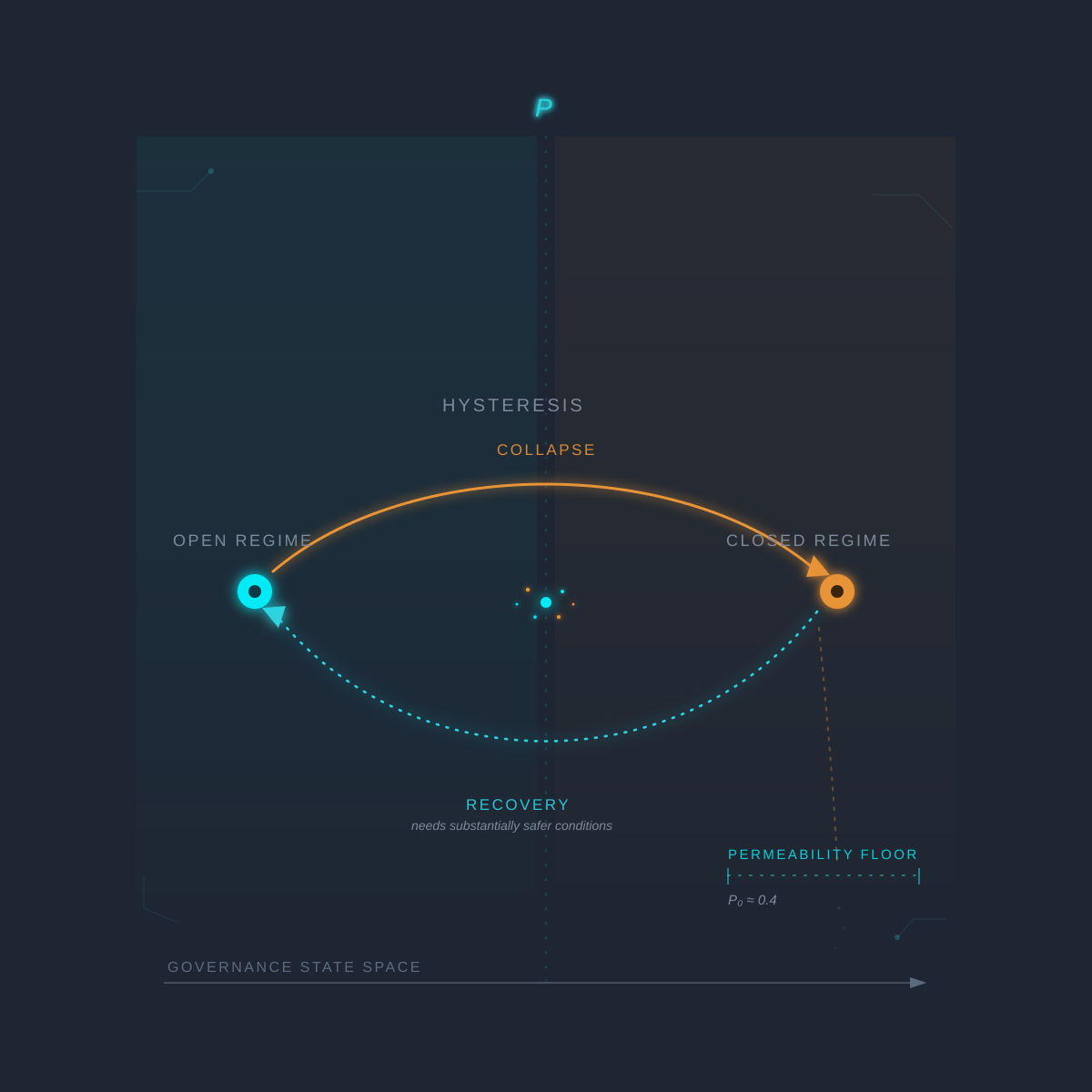
Closure–Adaptation Dynamics
Paper XXVIII in the Governance as Engineering series. A five‑variable dynamical model of institutional closure and adaptation under uncertainty. Exhibits bistability, hysteresis, noise‑induced tipping, cascade collapse in coupled populations, and a critical constitutional permeability floor that prevents permanent closure. Formal results are reported as [R within model]; governance interpretations as [IP].

The Four-Year Ramp
Legislative volume in the Riksdag rises 73% from a mandate's first riksmöte to its fourth, accounting for 82% of all variance in output. Which parties govern accounts for 1.4%. Latency is flat at 71–72 days regardless of load, the additional propositions are not smaller, and rejection rates are constant across 23 of 24 riksmöten — the exception being one year of governmental collapse. The end-of-term surge is well documented in the political legislation cycle literature; its invariance to government identity is difficult to reconcile with the vote-seeking mechanism that literature ascribes to it.

Requisite Alignment
Asks whether dimensional sufficiency is enough. In an exactly‑solved partially‑observed control problem, a fully informative feedback signal that evaluates a systematically wrong target loses substantial decision value — and two displacements of identical information content but different geometric structure impose different, even oppositely‑ordered, costs. The result isolates a second constraint orthogonal to requisite variety: the distinction an observable resolves must be aligned with the distinction the controller's action turns on, and alignment has geometry. Paper XXVII in the Governance as Engineering series.

The Cost of Returning
Paper X modelled reversion from epistemic consolidation as a single small constant. This paper replaces the placeholder with an explicit mechanism: competence atrophies in disuse, return is nucleated by the best‑preserved channel and propagated by a cascade governed by an escape‑ladder theorem. The phase structure, the staircase plateaus, the duality of the forces that block and accelerate return, and the role of institutional time are all established within the model. Paper XXVI in the Governance as Engineering series.
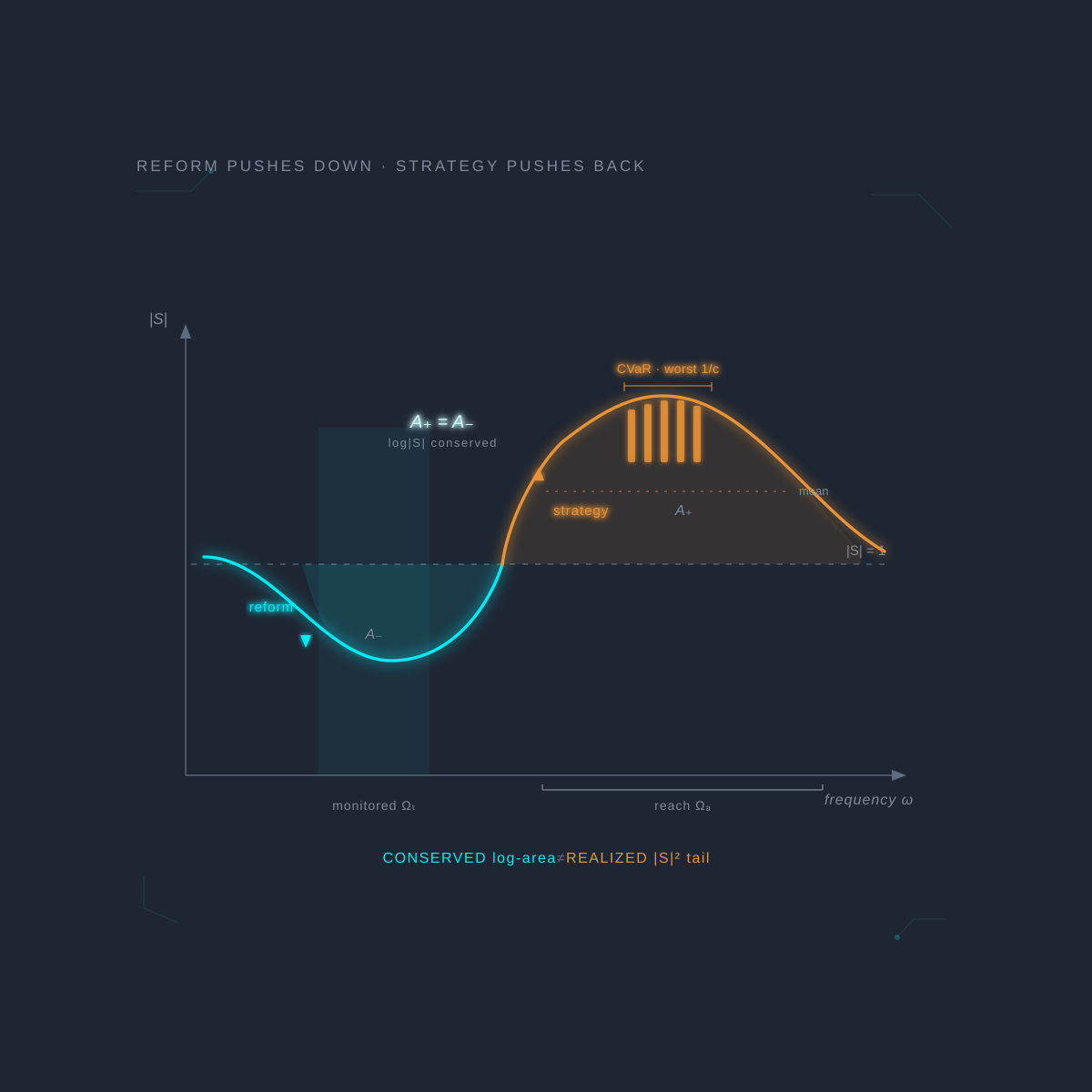
Where Reform Pushes Down, Strategy Pushes Back
Examines the claim that suppressing a monitored measure relocates pressure into unmonitored channels. Imports Bode's sensitivity integral as a genuine conservation law and CVaR as an adversarial allocation benchmark, then separates the two geometries: conserved log‑sensitivity does not determine strategic loss. A synthesis sweep shows that deeper proxy suppression raises the accessible exploitability floor, and that robustness allowances narrow — and at maximal suppression close — the gap between risk‑blind and risk‑aware design. The governance transfer is split into two explicitly bounded layers. Paper XXV in the Governance as Engineering series.
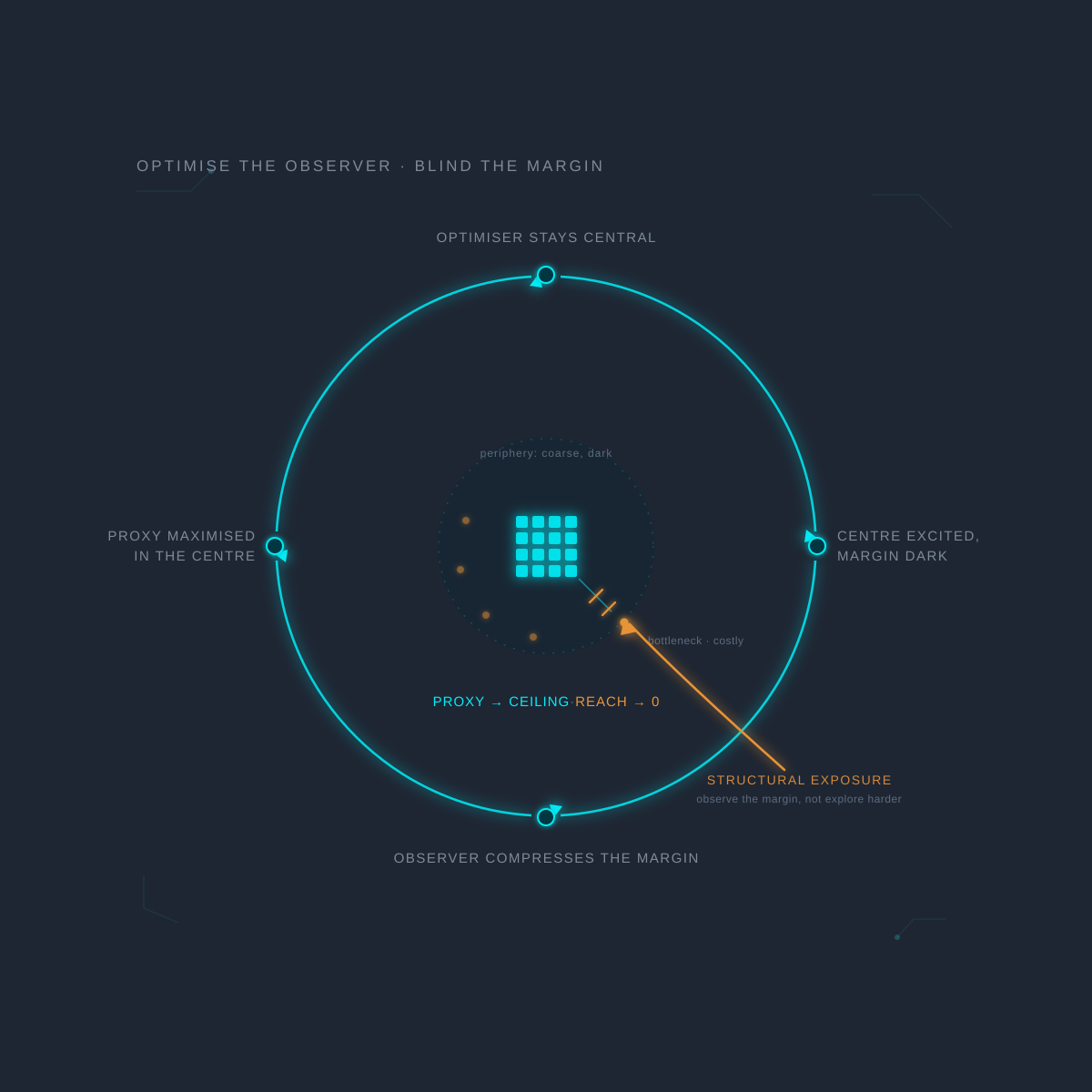
The Observer You Cannot Afford to Excite
Asks what changes when a diversity metric becomes an optimization target rather than a passive sensor. In a minimal gridworld, a learned observer allocates resolution to frequently visited regions and compresses the periphery; optimizing a diversity proxy built on that observer drives the proxy to its ceiling while destroying reachable access to peripheral options. The blind spot is not imposed — it is produced and maintained by the closed loop. Only structural exposure that guarantees observation of the margin, not broader exploration within existing pathways, repairs the decoupling. Paper XXIV in the Governance as Engineering series.

The Shape of Reform
The sibling paper promised by Paper XIX. Reports that the descriptive geometry of factorization space mostly does not exist — stress rescales rather than reshapes the space, and no topological transition appears. What survives is a directed adaptation cost: asymmetric, non‑composing, and weakly predicted by behavioral distance. Reform stages through the target's neighbourhood, not along a geodesic, and the map of behaviors is not the travel between them. Paper XXIII in the Governance as Engineering series.

What Cannot Be Guaranteed
Examines three demands for assurance — from inside, from outside, and before the world — and shows that each fails for a reason of its own. Certification incompleteness is a structural diagnosis; reform convergence undecidability and No Free Lunch are shallow but have useful contrapositives. A registered minimal model demonstrates a flooding mechanism that makes failing institutions look healthier, not sicker. Paper XXII in the Governance as Engineering series.

When to Stop Learning, and When to Stop
A governance architecture learns, adapts, and eventually confronts the question of whether it should still exist. This paper traces three separations along that lifecycle: learning from adaptation (improving the model is not the same as maintaining the coupling), meta‑learning from free improvement (the hierarchy of learning‑to‑learn must close on invariants), and persistence from purpose (the terminal adaptive act may be to end or transfer). A registered minimal model demonstrates learning breaking coupling by outrunning absorptive capacity. Paper XXI in the Governance as Engineering series.
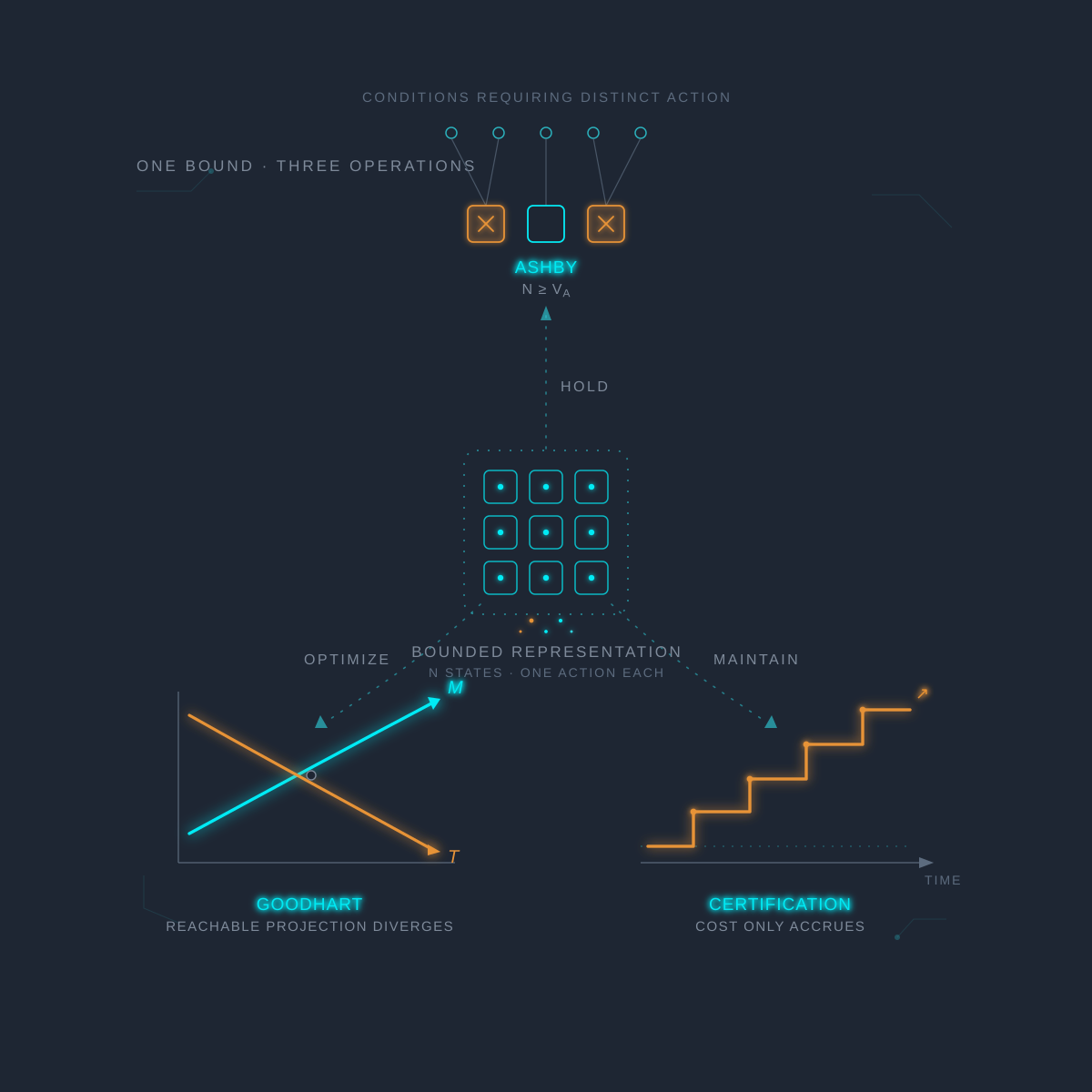
Three Laws from One Bound
Derives Ashby's law, Goodhart's law, and the monotone cost of certification from a single premise: a controller with a finite partition of its world. Ashby is a pigeonhole theorem, Goodhart is sharpened into an intervention‑set result with a registered demonstration, and certification cost is a non‑decreasing accounting quantity. The search for a stronger conservation law failed, and the failure is reported as part of the result. Paper XX in the Governance as Engineering series.

Governors, Sentinels, and Bridges
Shows that a factorization can carry three functionally distinct kinds of value — governing well, warning early, or holding the ecology together — and that these dissociate: the one that governs best is generally not the one that warns best or connects best. Winner‑take‑all selection rewards only the first. Demonstrated across twenty independently retrained model ecologies. Paper XIX in the Governance as Engineering series.
Below the Factorization
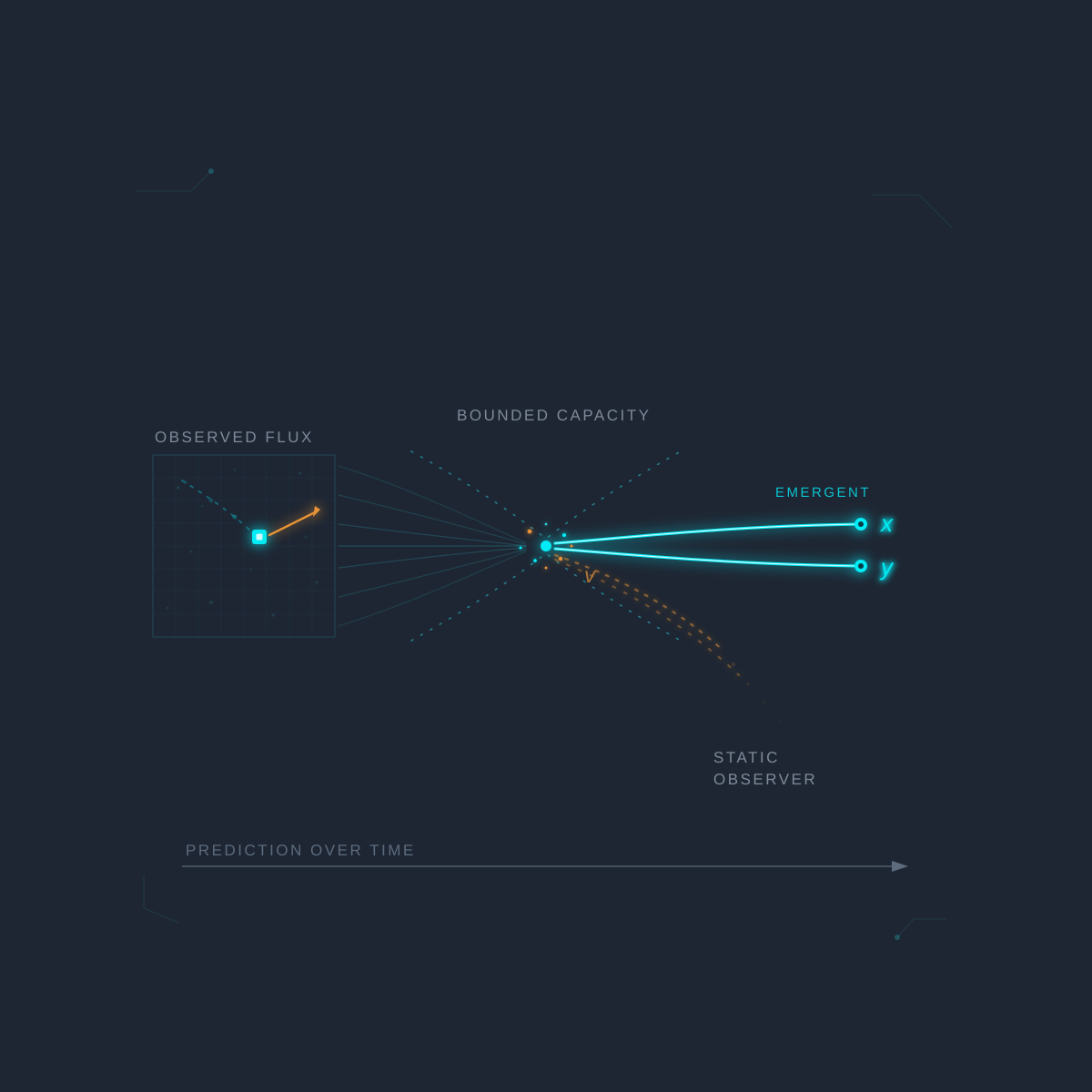
Every paper in the series begins with a factorization already in place — an observation channel, a choice of which variables exist for the system at all. This paper asks where that channel comes from. It argues that factorization emerges from bounded representational capacity plus a temporal‑prediction objective, with no action or viability pressure required. A minimal model exhibits emergence, structured blindness, and non‑unique, symmetry‑broken selection across forty preregistered seeds. The foundations paper of the Governance as Engineering series.

The Boundary Instability Principle
Extends Paper XII by removing the assumption that the coupling between a jurisdiction and its environment is fixed. Shows that when governance learning acts through channels that also carry cross‑boundary influence, decomposability becomes reflexive — the boundary that was correct at design time does not stay correct, and the un‑correcting process is the controller's own adaptation. Formalizes the Non‑Factorizability Theorem, a reflexive boundary cycle, a Critical Learning Bandwidth that closes endogenously, and a failing early‑warning index. Paper XVIII in the Governance as Engineering series.
The Certification Floor
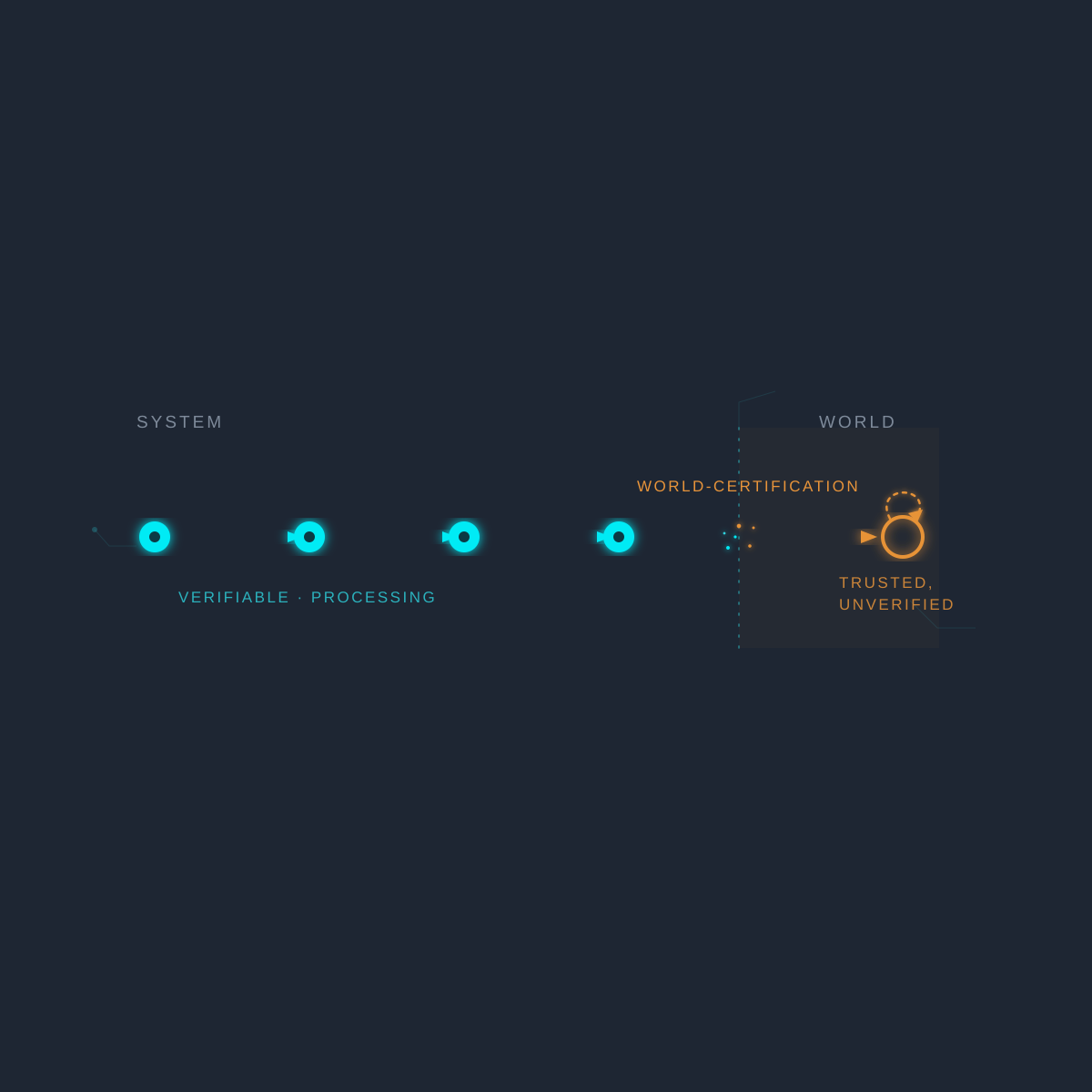
Isolates the structural reason that an adaptive coordination boundary retains an irreducible certification link. Derives a relocation invariant: automating a coordination boundary relocates the irreducible world‑certification link upstream but never removes it. Shows the invariant is scope‑bounded to world‑coupled coordination and fails for self‑referential coordination. Paper XVII in the Governance as Engineering series.

Why Diversity Resists Formalization
Four disciplines — control theory, evolutionary biology, institutional economics, and decision theory — were each asked the same structural question in strictly native vocabulary. Their independently derived minimal formal statements share a single decay‑plus‑source‑term structure. The paper does not propose a unified theory, but a corrected order parameter: source‑term locality, the axis along which the four collapses align and differ. Paper XVI in the Governance as Engineering series.

Self III: The Operator — How Institutions Inherit the Limits of Their Nodes
Closes the seam between the governance series and the Self papers. Derives Inherited Unobservability: an institution's capacity to perceive interior dimensions of the governed is upper-bounded by the perceptual capacity of the human operators through whom those dimensions must pass. Couples operator self‑opacity to distortion in estimating others' interior states. Identifies the operator‑seeded legitimacy spiral. The final Self paper, bridging personal and institutional architecture.

The Adaptation Bottleneck: Throughput Constraints on the Sense–Learn–Execute Loop
The Sense–Learn–Execute triad was established as three separately justified requirements. This paper treats them as three simultaneous claims on finite processing capacity and shows that effective adaptive throughput is gated by the slowest stage. Identifies three backlogs — information, innovation, and reality — and derives design implications for functionally separating the loop's legs. The dynamic dual of Paper V: where static deficits compound, dynamic capacities are gated by their minimum. Paper XV closes the loop on Cycle Two.

Governance as an Adaptive Controller: Exploration, Memory, and the Conditions for Institutional Learning
Completes the Cycle Two adaptation triad. Models governance learning as a dual control problem, formalising the exploration–exploitation trade‑off, institutional memory, and persistent excitation. Identifies five failure modes — exploration starvation, model lock‑in, exploitation lock‑in, learning‑induced oscillation, and the forgetting‑without‑learning trap — and derives design principles for adaptive governance architectures. Paper XIV consolidates the theoretical arc of Cycle Two and opens the transition to engineering.

Legitimacy as Emergent Gain: The Dual-Channel Coupling of Trust in Governance Architecture
What is legitimacy, structurally? It is not a primitive of governance architecture but an emergent coupling state — a parameter generated by the interaction between architecture and the governed that simultaneously modulates actuation effectiveness and observation fidelity. This paper models legitimacy as an endogenous scheduling variable in a linear parameter-varying control system, deriving the legitimacy trap, the borrowed-vs-built distinction, and hysteresis dynamics. With design principles for legitimacy-sensitive architectures and empirical illustrations. Paper XIII bridges the series' primitives to the outcomes they produce.

Boundary Selection Deficits: How the Wrong System Boundary Defeats Perfect Internal Governance
Can a controller with perfect internal observation and actuation still fail? Yes — if it has drawn the wrong system boundary. This paper models the mismatch between jurisdictional perimeters and the actual coupling structure of the systems they govern. When causally relevant dynamics fall outside a controller's boundary, they become unmodeled disturbances that feed back through the M-Δ loop, destabilising the system from outside any internal dashboard's view. Introduces the boundary mismatch index B, the pooling paradox, and the Information-Actuation Frontier connecting boundary selection to delegation depth. With simulation and empirical illustrations from climate, pandemics, the EU, India, and Israel. Paper XII opens Cycle Two of the series.

Reform Exhaustion: Delegation Depth and the Controllability of Governance
The actuation channel — the path policy intent travels from centre to street — has been the untreated channel in the series. This paper models the delegation chain as a sequence of projections, delays, and noise injections that survive even when every actor is competent, honest, and compliant. The central result is an energy law: the minimum control effort required to realise a policy target grows superlinearly with delegation depth. Deep chains do not refuse policy; they price it out. With country‑report evidence, simulation, and a within‑country empirical anchor. Paper XI closes the series' first theoretical cycle.

Requisite Observer Diversity: Why Civilizations Need Multiple, Independently‑Constituted Epistemic Systems
Extends the Governance as Engineering series to observer populations. Argues that civilizational epistemic resilience requires an observer ensemble whose effective rank exceeds the dimensionality of the uncertainty it monitors. Formalizes Requisite Observer Diversity, derives the collapse dynamics of epistemic monocultures (including the liability shield and model collapse), and specifies design principles: constitutionally protected epistemic institutions, ensemble methods, subsidiarity of observation, precautionary action gate, and predictive‑validity weighting. Includes a simulation of epistemic monoculture collapse. Paper X in series.

The Political Economy of Requisite Governance: Transition Pathways Under Incumbent Selection Pressure
Models the transition to requisite governance as a contested control problem between reform coalitions and incumbent controllers. Introduces the transition variety ratio Ω, formalizes three structural traps (bypass, legibility, incentive‑compatibility), and derives design principles for transition mechanisms — sunset‑coupled bypasses, protected experimental spaces, incumbent buy‑out protocols, and observer diversity. Includes historical calibration (British abolition 1833, Meiji Restoration, Montreal Protocol, German coal phase‑out) and three simulations. Paper IX in the Governance as Engineering series.

Measuring the Variety Gap: A Parametric Framework for Diagnosing Governance Failure
Paper VIII in the Governance as Engineering series. Develops a systematic method for measuring the Variety Gap in governance systems, mapping eight structural primitives to observable parameters and constructing a composite diagnostic index. Calibrated against the twenty-one cases in the series and validated on three pilot cases not used in framework development.

The Architecture of Governance Failure: Requisite Variety, Coordination Failure, and the Limits of Modern States
A unified framework diagnosing why governance systems become blind to their own fragility. Connects Ashby's Law of Requisite Variety, Goodhart's Law, and the coordination failure tax into a single architecture of institutional collapse, illustrated through cross-national case studies, and derives the architectural prerequisites for adaptive governance.

The Variety Gap: What We Don't Optimize For, We Lose the Ability to See
Objective functions are observation architectures. Low-dimensional value functions produce the same structural collapse as low-dimensional governance channels. The variety gap — the mismatch between the dimensionality of reality and the value architecture — is introduced as a unifying diagnostic for systemic blindness. Paper VI in the Governance as Engineering series.
The Coordination Failure Tax
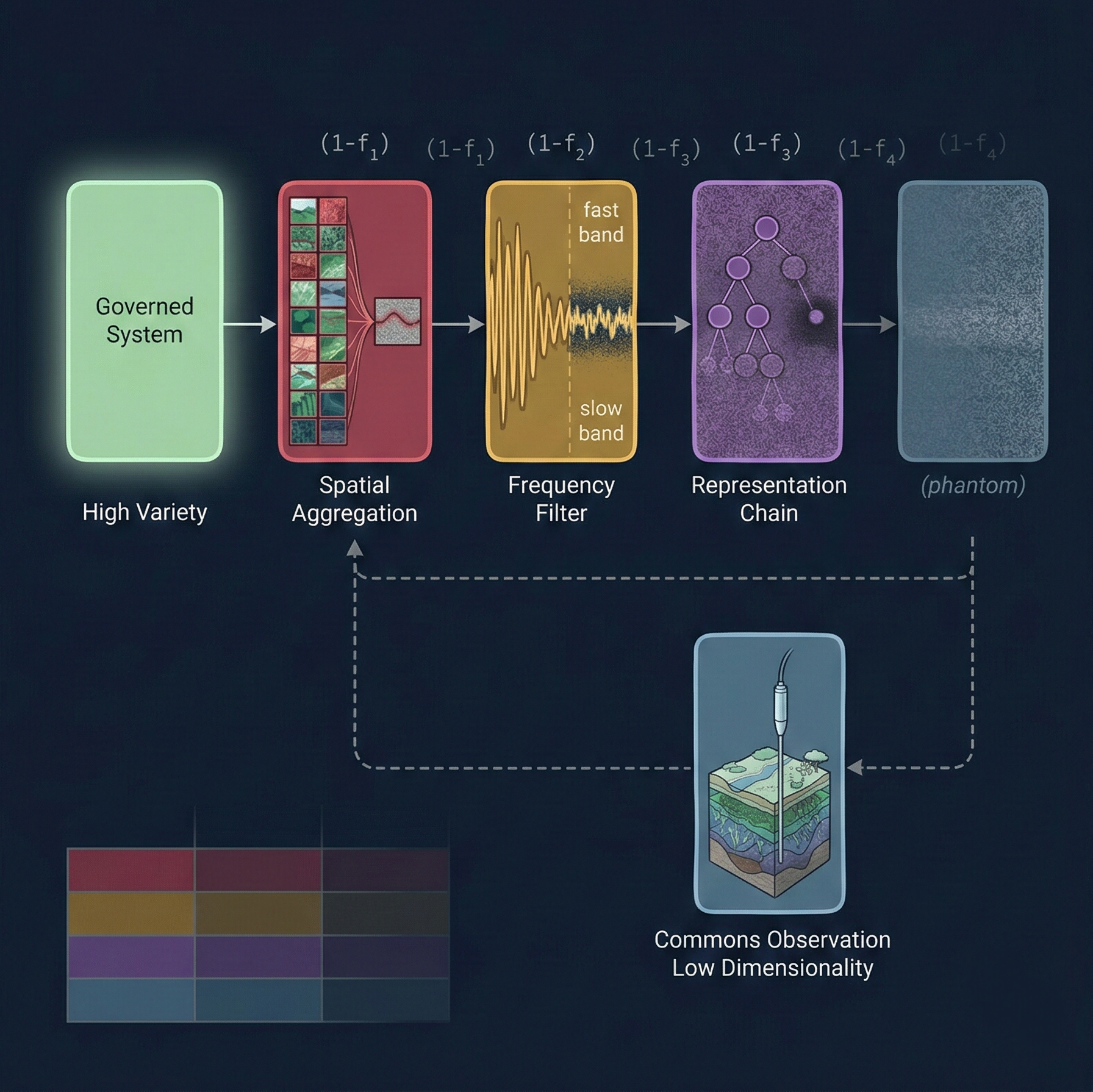
Four governance failure modes — spatial blindness, frequency gaps, preference invisibility, and observational inadequacy — do not add. They multiply. This paper introduces the coordination failure tax, maps the compounding mechanism formally, and shows how the Global Governance Frameworks constitute a structural response to all four diagnosed constraints simultaneously. Paper V in the Governance as Engineering series.

Requisite Variety and the Commons: Why Proximity Governs
The tragedy of the commons is an architectural failure — a missing feedback loop — not a motivational one. Ashby's Law of Requisite Variety determines which governance systems can stabilize renewable resources: state management performs worse than open access, and indigenous resource sovereignty is a structural engineering requirement. Paper IV in the Governance as Engineering series.

The Observability-Democracy Connection: How Representation Chains Destroy the Signal They Are Meant to Transmit
Representation chains with three or more layers are constitutionally unobservable: noise variance exceeds surviving signal variance at the policy layer. No institutional reform within the existing architecture can restore preference transmission fidelity. Paper III in the Governance as Engineering series.

Fractality as Stability: A Multi-Scale Control-Theoretic Proof
No single-scale controller can stabilize a system facing simultaneous fast, medium, and slow disturbances. Fractal architectures — nested hierarchies of controllers matched to their disturbance timescale — are the stability-optimal solution. Paper II in the Governance as Engineering series.
Governance Stability Simulator: A Control-Theoretic Model of Institutional Adaptation
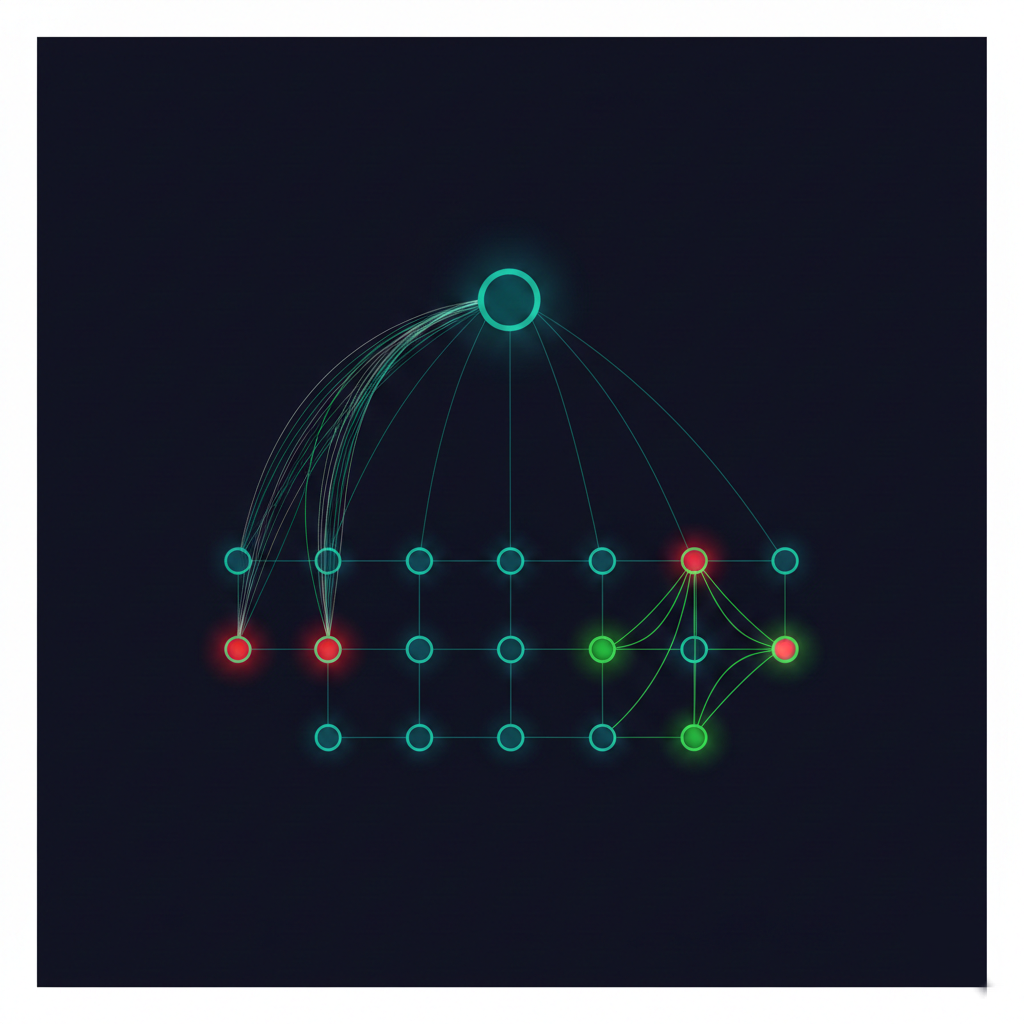
An open analytical framework modelling governance as a feedback control system. Demonstrates how latency and signal fidelity place hard mathematical ceilings on institutional performance — and why subsidiarity is an engineering requirement, not a political preference. Paper I in the Governance as Engineering series.

The Architecture of Stability: A Systems-Theoretic Framework for Power and Governance
A transdisciplinary analysis showing that centralized governance with time delay is mathematically unstable, and proposing fractal subsidiarity—with Sweden as the prototype—as the constitutional solution for adaptive, resilient societies.

Adaptive Self‑Governance: The Reflexive Controller and the Limits of Self‑Revision
Companion to The Self‑Variety Gap and Cycle Two of the Governance as Engineering series. Applies the adaptation triad — observer diversity, actuation integrity, and adaptive learning — to the self as a controller whose controller and plant are the same system. Models the correlation tax on self‑knowledge, delegation‑depth attenuation between intention and act, built vs. borrowed self‑trust, boundary calibration, and the reflexive risk of self‑revision destabilising the regime being revised. Includes formal appendices on self‑observer correlation, actuation chain attenuation, self‑legitimacy dynamics, and observer–plant identity.

The Variety Gap in the Self: What a Person Optimizes For Determines What They Can Perceive
Extends the governance-as-engineering framework to self-governance. The ego is a low-dimensional controller; narrow personal values create blind spots that eventually return as crises. Introduces the self-variety gap (G_self) — a unifying diagnostic for psychological blind spots. Companion to the Governance as Engineering series.

Preventing 1933: The Architecture of Democratic Resilience
A systems architecture analysis of the Weimar Republic's collapse, demonstrating how dual-currency systems and epistemic protocols could prevent a modern democratic failure.

Beyond Integration: Nonduality, Psychosis, and the Aperture Problem
A personal and theoretical exploration of consciousness development, modal flexibility, and the systemic barriers preventing safe exploration of psychiatric medication necessity. Integrates Project Janus framework with nondual recognition to propose new approaches to mental health, AI alignment, and human development.

The Fractal-Cybernetic Model of Consciousness
A transdisciplinary framework bridging cybernetics, fractal geometry, and contemplative science to explain consciousness evolution toward awakening. Integrates Ashby's requisite variety, Mandelbrot's fractality, and nondual mysticism into a unified model of consciousness development.

Cognitive Scaffolding: A Multi-Model AI Synthesis Method
A comprehensive methodology for leveraging diverse AI models to develop robust, holistic solutions for the global polycrisis.

The Regenerative Governance: Integrating the Hardware, Heart, and Nervous System
A foundational white paper introducing the core architectural innovation of the Global Governance Frameworks.

The Currency of Care: Why Universal Basic Income Isn't Enough
An in-depth exploration of why UBI is a necessary but insufficient solution to the 'crisis of value,' proposing the AUBI system.

Addiction as Integration Failure: A Multi-Domain Framework
A rigorous analysis applying Project Janus to the crisis of attention, proving that modern addiction is a systemic integration failure, not an individual pathology.

The Change Paradox Field Manual
A comprehensive, open-source protocol for building transformative political power. Integrates nervous system regulation, Spiral Dynamics, and on-the-ground organizing tactics into a 7-step framework for movements that win.

Beyond the Duopoly: A Playbook for Post-Polarized Politics
Diagnoses political polarization as a systems failure and proposes an integrated framework to restore democracy's capacity for collective wisdom.

The Infinite Paradox: Non-Dual Ethics for Planetary Governance
A comprehensive framework for governance that honors both moral clarity and systems humility, providing practical tools for navigating ethical dilemmas.

The Responsive Society: Aligning with Truth in an Unknown World
A foundational white paper exploring how societies can navigate uncertainty with wisdom rather than fighting it with force.

Beyond Fragmented Truth: A Reasoning Path from Ancient Wisdom to Modern Governance
A methodological framework for using AI-enhanced reasoning to bridge ancient wisdom traditions and contemporary governance challenges.

A Collaborative Map of Awakening: Integrating States of Consciousness
Introduces a bi-dimensional framework distinguishing between universal awareness development and diverse contemplative realizations.

Beyond States: Weaving the Five Streams of Holistic Co-Flourishing
Argues that consciousness development alone is insufficient, requiring integration across five interdependent streams for true flourishing.