The Treaty for Our Only Home: A Blueprint for Planetary Resilience.
Published: June 18, 2025
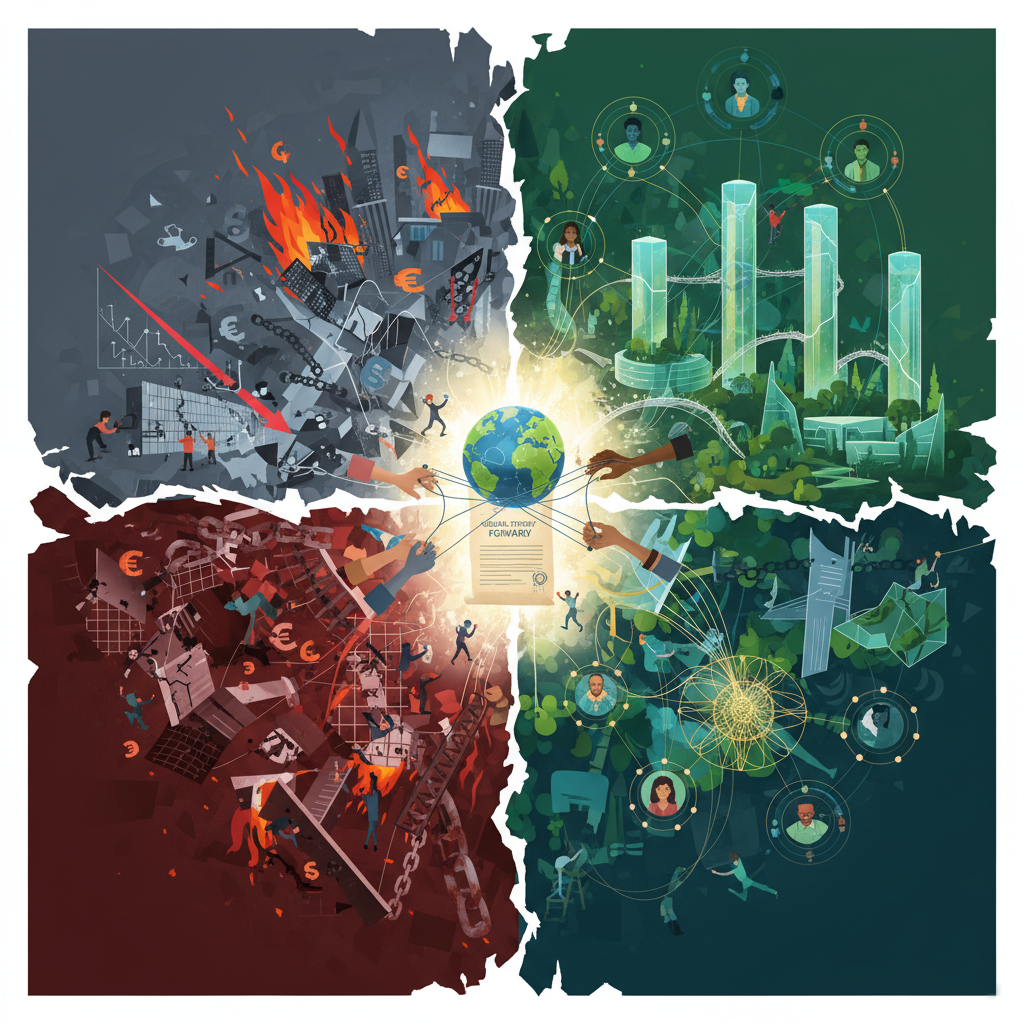
We’re all feeling it, aren’t we? The news cycles are relentless, filled with wildfires, floods, economic jitters, political polarization, and the lingering shadow of global health crises. It can feel overwhelming, like we’re caught in a perfect storm of problems. This isn’t just a collection of separate issues; it’s what many are now calling the polycrisis – interconnected failures in our climate, economic, and political systems that amplify each other in dangerous feedback loops.
Our current global governance systems, largely designed in the wake of World War II for a different era, are struggling to keep up. We see it when urgent climate funding is vetoed, when global supply chains buckle under pressure, or when disinformation erodes the very fabric of democracy. The human cost is immense, from displaced communities in Bangladesh to patients rationing life-saving medication.
But what if there was a way to upgrade our global operating system? What if we could move beyond incremental reforms that constantly fall short, and instead embark on a journey of civilizational transformation – one that builds resilience, ensures ecological integrity, and fosters shared prosperity for all?
This is the audacious, yet deeply pragmatic, vision behind the Treaty for Our Only Home.
The Problem Isn’t Lack of Solutions, But Lack of Governance
The core insight of the Treaty is that we’re not lacking solutions; we’re lacking the governance systems capable of implementing them at the speed and scale our crises demand. We have the technology, the knowledge, and the existential necessity to act now. The Treaty offers a comprehensive blueprint, not a utopian dream, designed to transform our crisis-generating systems into resilience-generating ones.
A New Architecture for a New Era: The Five Pillars
Imagine global governance built on five integrated pillars, each designed to address a critical failure of our current system, and each reinforcing the others:
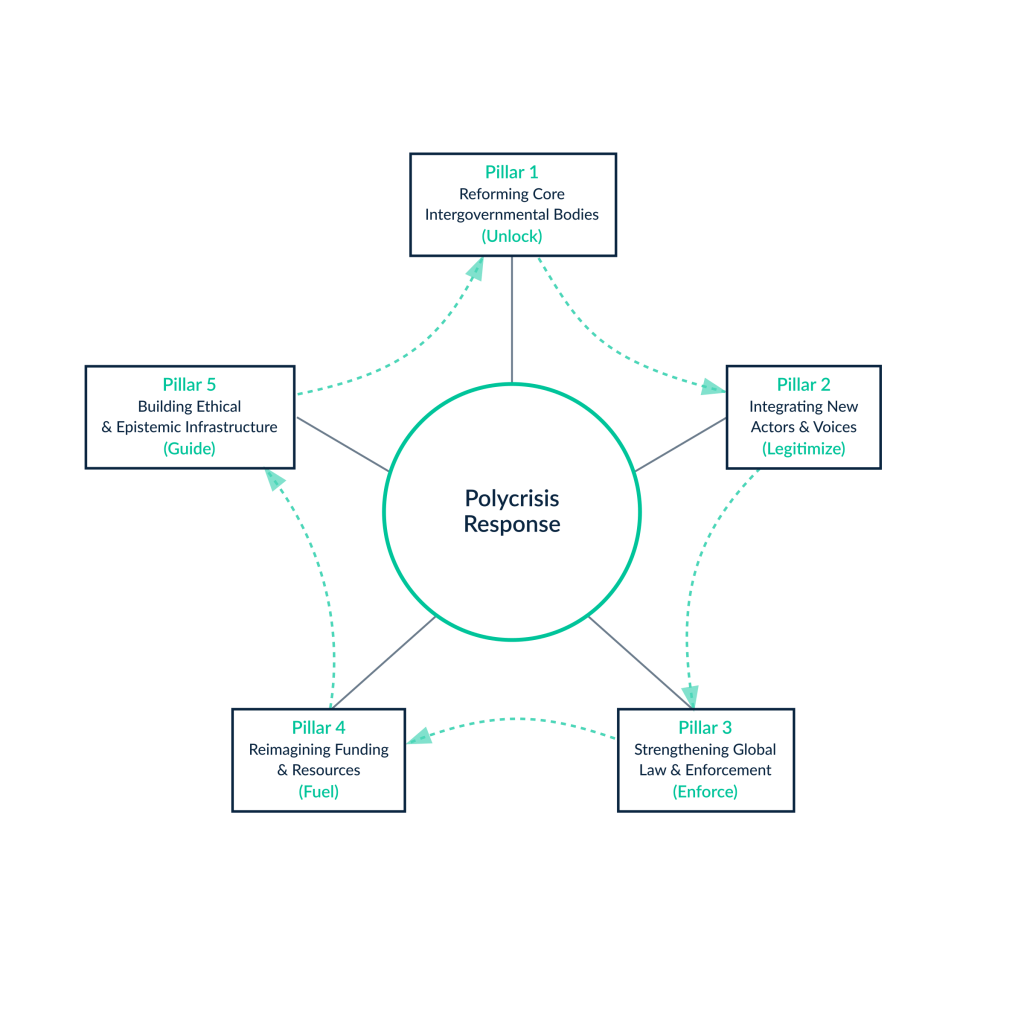
Reforming Core Intergovernmental Bodies: This pillar tackles the paralyzing gridlock in institutions like the UN Security Council. Imagine a UNSC Veto Override Protocol, where urgent global issues like climate emergencies can’t be blocked by a single nation. This unlocks decisive action.
Integrating New Actors & Voices: Global challenges aren’t just for nation-states. This pillar brings in the crucial voices of cities, civil society, indigenous peoples, and youth. A Global Citizens’ Initiative could enable binding global referendums, giving ordinary people a direct say in decisions that affect our shared future.
Strengthening Global Law & Enforcement: Accountability is key. This pillar aims for universal application of international law, ensuring no actor is above it. It proposes Ecocide Law, making large-scale environmental destruction a prosecutable crime, alongside new mechanisms for corporate accountability.
Reimagining Funding & Resources: Effective governance needs independent, reliable funding. This pillar suggests innovations like a Global Carbon Tax and a Financial Transaction Tax to fund global public goods – from pandemic preparedness to climate adaptation – rather than relying on inconsistent voluntary contributions. It also champions Debt Justice Protocols to prevent vulnerable nations from being crippled by debt during crises.
Building Ethical & Epistemic Infrastructure: To navigate complexity, we need wisdom and truth. This pillar focuses on fostering trust, critical thinking, and collective purpose, proposing an “Office of the Adversary” to institutionalize skepticism and ensure robust decision-making.
These aren’t separate solutions; they are interconnected, creating a powerful synergy. Funding enables enforcement, participation legitimizes institutions, and wisdom guides resource allocation.
The Core Principles: Our Guiding DNA
Underpinning these pillars are seven core principles that act as the constitutional DNA of this new global governance:
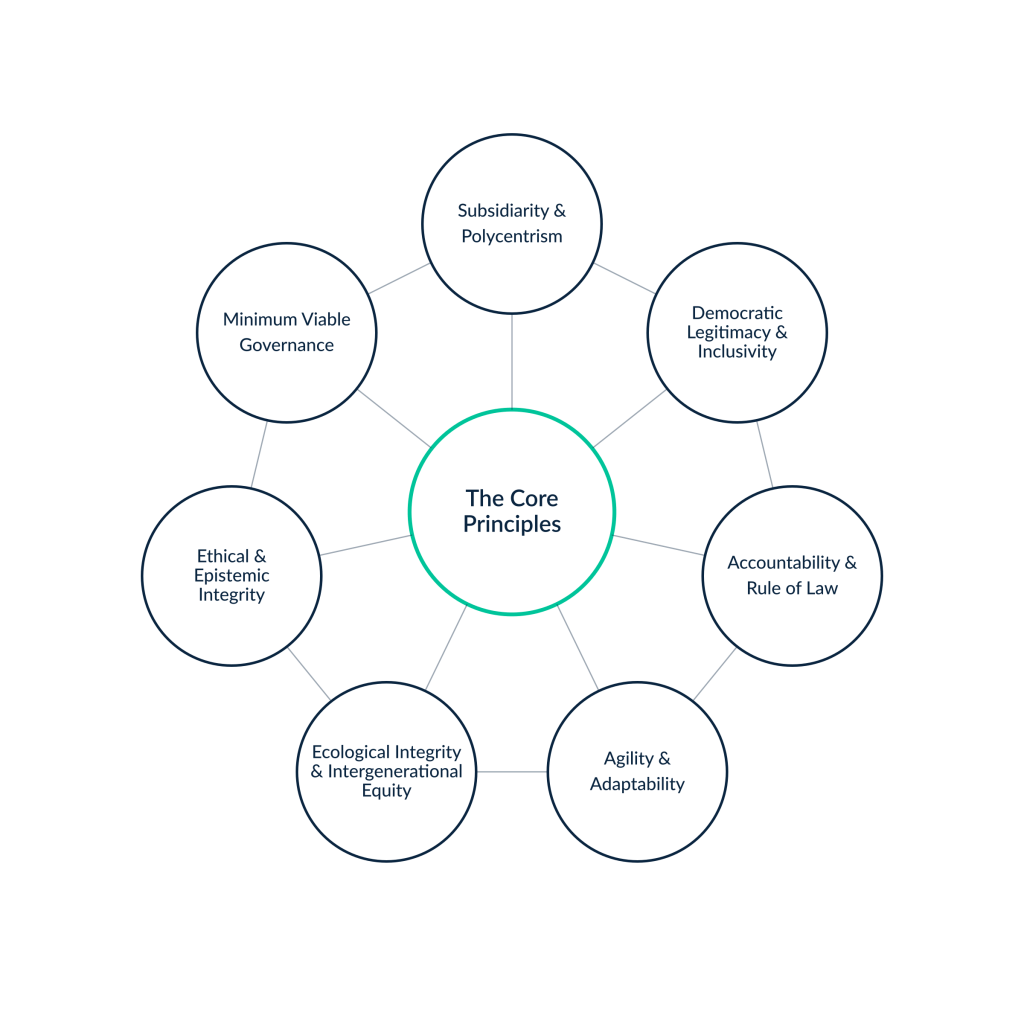
Subsidiarity & Polycentrism: Decisions made at the lowest effective level, with global coordination for planetary issues.
Democratic Legitimacy & Inclusivity: Authority derived from the people, with reserved roles for marginalized voices.
Accountability & Rule of Law: Transparent, enforceable international law applied universally.
Agility & Adaptability: Dynamic institutions with rapid response and renewal mechanisms.
Ecological Integrity & Intergenerational Equity: Decisions within planetary boundaries, prioritizing future generations.
Ethical & Epistemic Integrity: Governance grounded in truth-seeking and ethical reflection.
Minimum Viable Governance: Focusing on simple, high-impact reforms.
These principles ensure that governance truly serves humanity and the planet, even when faced with competing values.
From Vision to Reality: A Pragmatic Path Forward
I know what you might be thinking: “This sounds great, but how can it actually happen?” The Treaty is built on a dual-track implementation approach:
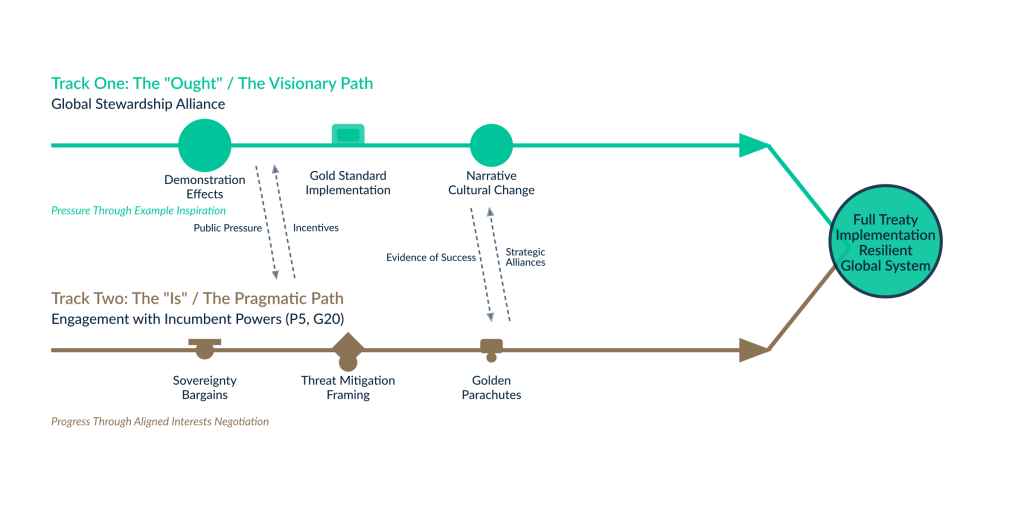
The Visionary Path: A “Global Stewardship Alliance” of 30-50 willing nations, cities, and organizations will begin implementing Treaty mechanisms within their own jurisdictions and through new bilateral agreements. This acts as a real-world demonstration, creating irrefutable evidence that these reforms work.
The Pragmatic Path: This involves strategic negotiations with current power holders. Instead of demanding they surrender influence, we offer “sovereignty bargains” – enhanced leadership roles in new, critical domains (like digital governance or climate technology) in exchange for limiting outdated authorities. It frames the Treaty as essential risk management, reducing the escalating financial and security liabilities of the current system.
This isn’t an all-or-nothing proposition. New mechanisms are piloted for defined periods (e.g., 5 or 10 years) with built-in “sunset clauses” for automatic review or termination if they don’t meet performance benchmarks. This de-risks the transformation.
Join the Transformation
The polycrisis affects us all. The solutions require us all. The Treaty for Our Only Home is a call to our collective courage, intelligence, and capacity for cooperation. It’s a roadmap for conscious evolution, moving us from a path towards civilizational collapse to one of regenerative flourishing.
This is not utopian dreaming, but practical necessity. The costs of maintaining dysfunctional systems now far exceed the costs of replacing them.
Are you ready to be part of the solution?
Explore the full details of the Treaty for Our Only Home on https://globalgovernanceframeworks.org/start-treaty.