Understanding Infinite Intelligence: A Systems Perspective
Published: December 1, 2024
I. Introduction
What if our fundamental understanding of intelligence has been constrained by the very way we think about it? We often speak of intelligence as something contained within—within a brain, within a computer, within defined boundaries. We measure it, compare it, and treat it as a characteristic that can be clearly delineated and attributed to specific entities. But what if this view is merely a reflection of our mind’s tendency to compartmentalize and categorize, rather than a true representation of intelligence’s fundamental nature?
Consider a forest ecosystem. Where exactly does its intelligence reside? Is it in the intricate root networks that share resources and information between trees? In the complex relationships between species that have co-evolved over millions of years? In the adaptive behaviors of individual organisms? Or perhaps in the emergent properties of the system as a whole? The more deeply we examine such questions, the more our conventional notions of intelligence begin to dissolve.
Intelligence, I propose, is not merely a property of individual entities but rather a fundamental aspect of reality itself—a force that permeates (or as expressed in Swedish, “genomsyrar”) the entire fabric of existence. This perspective challenges our traditional understanding in two crucial ways. First, it suggests that intelligence is nonlocalized, existing not in isolated pockets but as a continuous field of possibility and actualization. Second, it points to intelligence as potentially infinite in nature, manifesting in different forms and degrees while maintaining an underlying unity.
This is not merely a philosophical abstraction. Recent advances in various fields—from quantum physics to systems biology, from network theory to consciousness studies—have begun to reveal patterns of interconnectedness and emergence that challenge our reductionist tendencies. These discoveries suggest that intelligence might be better understood as a property of relationships and interactions rather than as a characteristic of isolated entities.
In this exploration, we will venture beyond the comfortable boundaries of conventional thinking about intelligence. We will examine evidence from both scientific and contemplative traditions, explore the practical implications of this perspective, and consider how this understanding might transform our approach to some of humanity’s most pressing challenges. Most importantly, we will investigate how this view of intelligence as an infinite, permeating force might offer new ways of understanding our place within the larger tapestry of existence.
This journey will challenge us to hold seemingly paradoxical ideas: how intelligence can both have degrees and be infinite, how it can be both measurable in specific contexts and boundless in its totality, how it can be both individualized and universal. Through this exploration, we might find that these apparent contradictions are not problems to be solved but rather gateways to a deeper understanding of the nature of intelligence itself.
As we proceed, I suggest being open to possibilities that might seem counter-intuitive to minds trained in reductionist thinking. In this way we can cultivate the capacity to see both the trees and the forest—and perhaps more importantly, the invisible relationships that make them inseparable parts of a larger whole. This is not just an intellectual exercise but an invitation to experience reality in a new way, one that might help us address the complex challenges of our time with greater wisdom and effectiveness.
II. Perspectives on Intelligence
When we pause to consider intelligence, we often find ourselves drawn to familiar examples—a child solving a puzzle, a scientist making a breakthrough, or perhaps a computer analyzing data. These instances of intelligence are readily apparent and have shaped our understanding of what intelligence means. Yet there are other ways to observe and appreciate intelligence that might enrich our perspective.
Consider how we currently approach intelligence. We typically define it through capabilities: the ability to learn, to solve problems, to adapt to new situations, to understand complex concepts. We measure it through tests, quantify it with scores, and categorize it into types—analytical, emotional, creative. These frameworks have proven useful in many contexts, from education to professional development. They help us understand certain aspects of intelligence and have practical applications in how we organize our societies and institutions.
Yet these useful frameworks also reveal interesting limitations in how we perceive intelligence. When we try to measure intelligence, we often find ourselves measuring specific expressions of it rather than its fundamental nature. It’s similar to measuring the height of waves while trying to understand the ocean—useful for certain purposes, but perhaps missing something essential about the water itself.
The concept of compartmentalization naturally emerges in our thinking about intelligence. We tend to see it as contained within specific boundaries—within a brain, within a species, within a system. This isn’t surprising; our minds excel at creating categories and divisions as tools for understanding. These divisions help us navigate complexity and make sense of our experiences. However, they might also obscure certain aspects of intelligence that become visible when we look at broader patterns and interconnections.
Intelligence often manifests as an emergent property—something that arises from the interactions between parts of a system rather than residing in any single component. We see this in how ideas develop through dialogue, how scientific understanding advances through collaboration, or how ecological systems maintain balance through countless interconnected processes. Each of these examples suggests intelligence operating at a level beyond individual entities.
This brings us to an interesting paradox: intelligence seems to express itself in degrees—we can observe more or less sophisticated forms of problem-solving or adaptation—while simultaneously suggesting something without clear boundaries or limitations. Like a fractal pattern that reveals similar structures at different scales, we might find intelligence expressing itself in various forms while maintaining certain fundamental characteristics throughout.
The relationship between local and nonlocal expressions of intelligence presents another fascinating area for exploration. While we experience intelligence in specific contexts and forms, these might be viewed as particular manifestations of something more pervasive. Similar to how light can behave both as a particle and a wave, intelligence might be understood both through its specific expressions and as a more fundamental aspect of reality.
These observations don’t invalidate our practical understanding of intelligence or the useful ways we’ve learned to work with it. Rather, they invite us to hold multiple perspectives simultaneously—to appreciate both the specific manifestations of intelligence we encounter in daily life and the possibility of intelligence as a more fundamental aspect of existence.
This multiplicity of perspectives enriches rather than replaces our understanding. It suggests that while we can continue to work effectively with intelligence in its various forms, we might also remain open to discovering new aspects of its nature. This openness to multiple viewpoints might itself be seen as an expression of intelligence—the capacity to hold complexity without needing to reduce it to simpler terms.
III. Scientific Foundations
The perspective of intelligence as a permeating aspect of reality finds interesting parallels in various scientific fields. Modern research across disciplines offers insights that enrich our understanding of intelligence as both localized and nonlocalized, finite and infinite.
Systems Thinking and Emergence
One of the most compelling scientific frameworks for understanding intelligence comes from systems thinking. In complex systems, we observe how intelligence emerges from the interactions between components rather than residing in any single part. Consider an ant colony: no individual ant possesses the intelligence to create sophisticated architectural structures or maintain optimal colony temperature. Yet collectively, through countless local interactions following simple rules, the colony exhibits remarkable problem-solving abilities.

The illustration above shows how simple nodes and connections can create complex networks. Similarly, intelligence often emerges from the interactions between elements rather than from any single component. This pattern appears consistently across scales—from neural networks to social systems to ecosystems.
Quantum Perspectives
Quantum physics offers intriguing parallels to our exploration of intelligence. Just as quantum particles exist in multiple states simultaneously until observed, intelligence might be viewed as both localized and nonlocalized depending on how we observe it. The quantum principle of entanglement, where particles remain connected regardless of distance, suggests forms of connection that transcend our usual understanding of space and time.
Fractal Patterns in Nature and Consciousness
Nature frequently displays fractal patterns—structures that repeat at different scales while maintaining similar properties. These patterns appear in tree branches, river networks, neural pathways, and countless other natural phenomena.
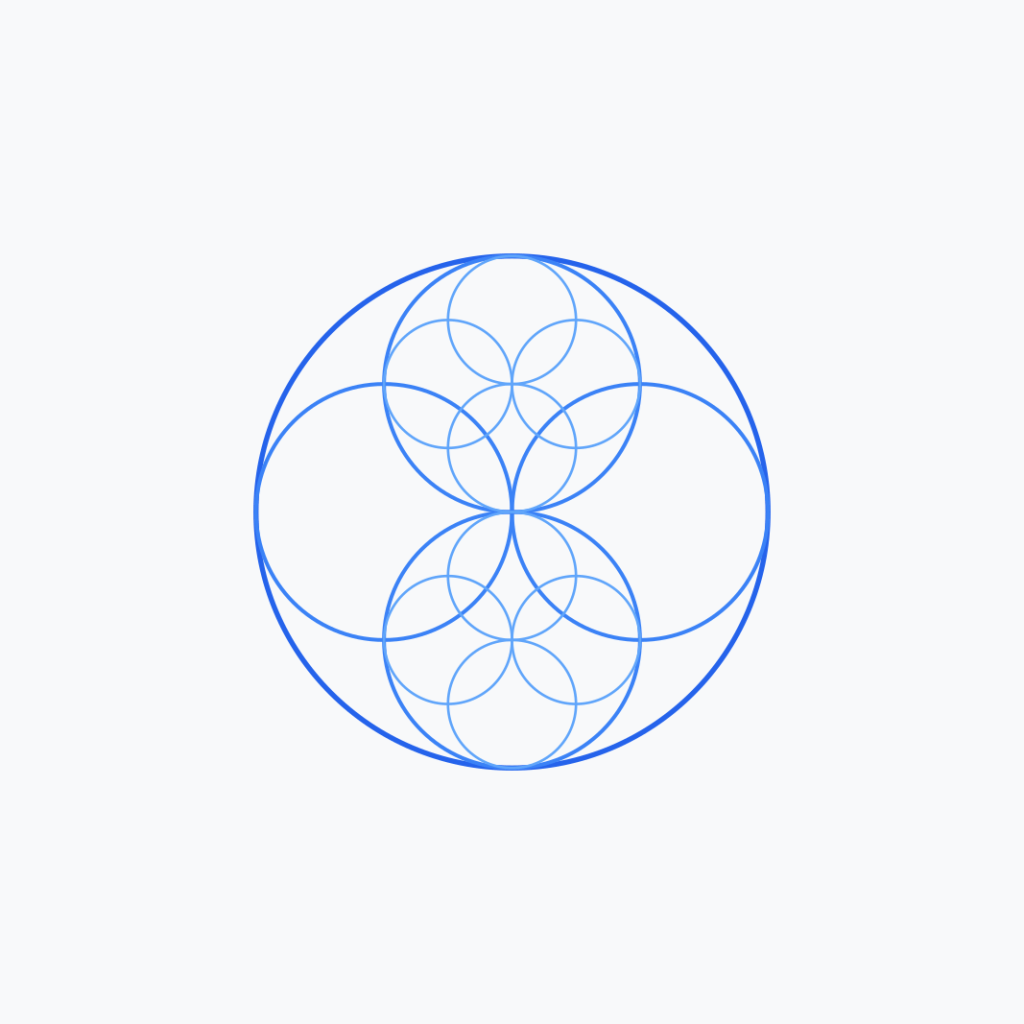
This fractal illustration represents how similar patterns can manifest at different scales. Like these patterns, intelligence might express itself similarly across various levels of organization—from cellular processes to ecosystem dynamics to cosmic phenomena.
Network Effects and Collective Intelligence
Network science reveals how intelligence can emerge from connections rather than individual nodes. The Internet serves as a fascinating example: while individual computers perform specific tasks, the network as a whole exhibits emergent properties that transcend the capabilities of any single component. Social networks, both digital and traditional, demonstrate similar principles of collective intelligence emerging from individual interactions.
Modern Scientific Discoveries
Recent scientific findings continue to reveal unexpected forms of intelligence in nature:
Trees communicate and share resources through underground fungal networks, dubbed the “Wood Wide Web”
Slime molds can solve complex mathematical problems despite lacking a brain
Bacteria demonstrate collective decision-making capabilities
Plant networks show sophisticated resource allocation strategies
These discoveries suggest that intelligence manifests in ways we’re only beginning to understand, often transcending our traditional definitions and expectations.
The Role of Scale
Scale plays a crucial role in how we perceive and understand intelligence. What appears as separate instances of intelligence at one scale might reveal itself as part of a larger intelligent system at another. For example:
Individual neurons → Neural networks → Brain function → Collective consciousness
Individual plants → Plant communities → Ecosystem dynamics → Planetary systems
Personal knowledge → Cultural knowledge → Collective human knowledge → Universal information
This scaling perspective helps us appreciate how intelligence might simultaneously manifest as both distinct instances and as part of a larger, interconnected whole.
Understanding these scientific foundations doesn’t require us to abandon more conventional views of intelligence. Rather, these insights from various scientific fields offer additional perspectives that enrich our appreciation of intelligence’s many manifestations. They suggest that what we typically recognize as intelligence might be specific expressions of a more fundamental aspect of reality—one that reveals itself in different ways depending on how and where we look.
IV. Philosophical Implications
The concept of intelligence as a permeating, infinite phenomenon resonates deeply with various philosophical traditions and opens up fascinating questions about the nature of reality itself. As explored in the earlier work on p(∞) = 1, this perspective challenges our fundamental assumptions about existence and consciousness, suggesting a reality far more interconnected and fluid than our everyday experience indicates.
Parallels with Panpsychism
When we consider intelligence as permeating all of reality, we find striking similarities with panpsychism—the view that consciousness or mind is fundamental to all reality. However, our perspective goes beyond traditional panpsychism by suggesting that intelligence isn’t merely present everywhere but is an infinite, organizing principle of existence itself. This aligns with the concept explored in p(∞) = 1 where all possibilities exist with certainty, suggesting that intelligence might be viewed as the infinite field of possibility from which all manifestations arise.
Eastern Philosophical Perspectives
Eastern philosophical traditions, particularly those dealing with non-duality, offer profound insights into this view of intelligence. The Buddhist concept of śūnyatā (emptiness) and the Vedantic understanding of Brahman (ultimate reality) both point to a fundamental ground of being that transcends our usual categorizations. Just as these traditions suggest that apparent separateness is an illusion, our exploration of infinite intelligence indicates that what we perceive as distinct instances of intelligence might be manifestations of a single, infinite field.
The Role of Consciousness
One of the most intriguing implications of viewing intelligence as infinite and permeating relates to consciousness. Rather than seeing consciousness as something that emerges from complex systems (like brains), this perspective suggests that consciousness might be an intrinsic aspect of the infinite intelligence that permeates reality. This mirrors the understanding presented in p(∞) = 1, where consciousness might be viewed as the aware space in which infinite possibilities manifest.
Dissolving the Subject-Object Divide
Traditional Western philosophy has long struggled with the distinction between subject and object, between the knower and the known. The concept of infinite intelligence suggests that this division might be artificial—a product of our limited perspective rather than a fundamental truth. When intelligence is understood as permeating all of reality, the traditional boundaries between observer and observed begin to blur, reminiscent of findings in quantum mechanics where the observer effect demonstrates the inseparability of observation and reality.
Challenging Anthropocentric Views
This understanding challenges strongly anthropocentric views of intelligence. If intelligence permeates reality itself, then human intelligence becomes not a unique phenomenon but rather one expression of a universal principle. This aligns with the broader implications of p(∞) = 1, suggesting that what we consider intelligence might be just one configuration among infinite possibilities.
Ethical Implications
The recognition of intelligence as an infinite, permeating phenomenon has profound ethical implications:
Interconnectedness: If intelligence permeates all reality, then our actions affect not just isolated parts but the whole fabric of existence.
Value: Traditional hierarchies of value based on perceived intelligence become questionable when intelligence is understood as infinite and all-pervasive.
Responsibility: Our role shifts from being isolated intelligent entities to participants in and expressions of an infinite intelligent reality.
The Nature of Knowledge
This perspective raises fascinating questions about the nature of knowledge itself. If intelligence is infinite and permeating, then what we call knowledge might be better understood as different configurations or expressions of this infinite field rather than something we acquire or possess. This connects with the probability space concept explored in p(∞) = 1, where different knowledge states might be viewed as different manifestations within the infinite field of possibility.
Time and Causality
The concept of infinite intelligence challenges linear notions of time and causality. If intelligence permeates all of reality, then cause and effect might be better understood as patterns within this infinite field rather than absolute principles. This resonates with the understanding in p(∞) = 1 that what we perceive as causal relationships might be particular manifestations within an infinite space of possibilities.
Beyond Dualism
Perhaps most profoundly, this understanding of intelligence points toward a reality beyond traditional dualistic thinking. The apparent opposites we often work with—mind and matter, subject and object, finite and infinite—might be better understood as complementary aspects of a single, infinite reality.
[non-duality-illustration]
The illustration above represents how apparent dualities exist within a larger unified whole. Just as the seemingly separate circles of “self” and “other” exist within and are part of the larger circle of ultimate reality, our experience of separate instances of intelligence exists within and as expressions of infinite intelligence. The flowing lines between the apparent dualities suggest their inherent interconnection, while the encompassing circle represents the ultimate non-dual nature of reality.
This transcendence of dualism opens up new ways of understanding existence itself, suggesting that the divisions we perceive might be useful conventions rather than fundamental truths. When we understand intelligence as permeating all of reality, we can see how even our ability to perceive and discuss these distinctions arises from the infinite intelligence itself.
V. Practical Applications
Understanding intelligence as an infinite, permeating phenomenon might seem abstract, but it has profound practical implications for how we approach various fields and challenges. By shifting our perspective from intelligence as a localized property to a fundamental aspect of reality, we can develop more holistic and effective approaches in multiple domains.
Environmental Awareness and Sustainability
When we view intelligence as permeating all of reality, our approach to environmental issues naturally shifts:
- Ecosystem Intelligence: Rather than seeing ecosystems as collections of separate entities, we can work with them as intelligent, self-organizing systems. This means:
Designing interventions that support natural intelligence rather than trying to control it
Recognizing feedback loops and allowing systems to self-regulate
Understanding that small changes can have far-reaching effects due to the interconnected nature of systems
- Regenerative Design: This perspective encourages:
Creating systems that enhance rather than deplete natural intelligence
Building with rather than against natural processes
Developing solutions that serve multiple purposes within the larger system
Artificial Intelligence and Machine Learning
The concept of infinite intelligence suggests new approaches to AI development:
- Distributed Intelligence: Instead of trying to create centralized, human-like AI:
Develop systems that tap into and facilitate existing patterns of intelligence
Focus on creating networks of smaller, interconnected intelligent systems
Design AI that enhances rather than replaces natural intelligence
- Biomimetic Approaches:
Study how intelligence manifests in natural systems
Create algorithms that mirror natural patterns of information flow
Develop AI systems that work harmoniously with biological intelligence
Education and Learning Systems
Understanding intelligence as permeating reality transforms educational approaches:
- Holistic Learning:
Move beyond compartmentalized subjects to integrated understanding
Recognize and work with multiple forms of intelligence
Create learning environments that support natural curiosity and discovery
- Collaborative Learning:
Design systems that leverage collective intelligence
Encourage cross-pollination of ideas across disciplines
Support emergent learning through interaction and exploration
Social Organization and Collective Intelligence
This perspective offers new ways to structure social systems:
- Organizational Design:
Create flexible, adaptive organizational structures
Support emergence of collective intelligence
Design systems that enhance rather than suppress individual creativity
- Decision-Making:
Implement participatory processes that tap into collective wisdom
Use systems thinking approaches to problem-solving
Develop feedback mechanisms that support intelligent self-organization
Personal Development and Growth
Understanding infinite intelligence has profound implications for individual growth:
- Self-Understanding:
Recognize oneself as an expression of infinite intelligence
Develop awareness of interconnection with larger systems
Work with rather than against natural patterns of development
- Practice and Development:
Engage in practices that enhance awareness of infinite intelligence
Develop skills for working with complex systems
Cultivate intuition and systemic understanding
Healthcare and Healing
This perspective suggests new approaches to health and healing:
- Systemic Health:
View health as an expression of systemic intelligence
Work with rather than against bodily intelligence
Recognize the interconnection between individual and collective health
- Integrative Approaches:
Combine multiple healing modalities
Support natural healing processes
Address root causes rather than just symptoms
Technology Development
A broader understanding of intelligence influences how we develop technology:
- Sustainable Innovation:
Create technologies that enhance natural intelligence
Design systems that support rather than replace natural processes
Develop tools that increase awareness of interconnection
- Human-Technology Integration:
Design interfaces that work with natural cognitive patterns
Create technologies that enhance rather than diminish human capabilities
Develop systems that support collective intelligence
Research and Scientific Inquiry
This perspective influences how we approach research:
- Methodological Approaches:
Develop methods that can work with complex, interconnected systems
Include multiple perspectives and forms of knowing
Recognize the role of the observer in research
- Integration of Knowledge:
Bridge gaps between different fields and disciplines
Recognize patterns across different scales and domains
Develop more holistic understanding of phenomena
Creativity and Innovation
Understanding infinite intelligence supports new approaches to creativity:
- Creative Process:
Tap into larger fields of intelligence for inspiration
Work with natural patterns of emergence
Recognize creativity as an expression of infinite intelligence
- Innovation Methods:
Design processes that support natural emergence of solutions
Create conditions for collective creativity
Develop approaches that work with rather than against natural patterns
These practical applications show how understanding intelligence as infinite and permeating can lead to more effective and harmonious ways of working with reality. By recognizing and aligning with this deeper understanding, we can develop approaches that are both more successful and more sustainable.
The key is to move from trying to control or create intelligence to working with and enhancing the intelligence that already permeates reality. This shift in perspective can lead to more effective and sustainable solutions across all domains of human activity.
VI. Bridging Science and Spirituality
The concept of infinite intelligence offers a unique opportunity to explore common ground between scientific inquiry and spiritual understanding. Rather than seeing these as opposing approaches to understanding reality, we can recognize them as complementary ways of engaging with the same infinite intelligence that permeates existence.
Common Ground Between Scientific and Spiritual Perspectives
Modern scientific discoveries increasingly align with insights long held by spiritual traditions:
- Interconnectedness:
Scientific View: Quantum entanglement shows that particles can be instantaneously connected regardless of distance
Spiritual View: Ancient concepts like Indra’s net describe reality as an infinitely interconnected web
Common Ground: Both perspectives point to a fundamental interconnectedness of reality
- Observer Effect:
Scientific View: Quantum mechanics demonstrates that observation affects the behavior of particles
Spiritual View: Consciousness plays a fundamental role in shaping reality
Common Ground: Both recognize the inseparability of observer and observed
- Emergence and Self-Organization:
Scientific View: Complex systems demonstrate spontaneous order and intelligence
Spiritual View: Divine intelligence manifests through natural patterns and forms
Common Ground: Both acknowledge inherent organizing principles in nature
Integration of Rational and Intuitive Understanding
The bridging of science and spirituality requires embracing both rational and intuitive modes of knowing:
- Complementary Ways of Knowing:
Analytical understanding through scientific method
Direct experience through contemplative practice
Integration through recognition of their mutual enrichment
- Beyond Either/Or Thinking:
Moving past the false dichotomy between scientific and spiritual understanding
Recognizing that different approaches can reveal different aspects of the same reality
Appreciating how multiple perspectives can enrich our understanding
Practical Implications for Research and Practice
This integration suggests new approaches to both scientific research and spiritual practice:
- Scientific Research:
Including subjective experience as valid data
Developing methods that can work with both quantitative and qualitative aspects
Recognizing the role of consciousness in scientific observation
- Spiritual Practice:
Using scientific insights to inform contemplative techniques
Applying empirical approaches to studying spiritual experiences
Developing practices that integrate both rational and intuitive understanding
Future Directions
The bridging of science and spirituality opens new avenues for exploration:
- Consciousness Studies:
Investigating the relationship between mind and matter
Studying non-local aspects of consciousness
Exploring the role of consciousness in physical reality
- Healing and Wellness:
Integrating physical and spiritual approaches to healing
Studying the effects of spiritual practices on health
Developing holistic approaches to well-being
- Environmental Solutions:
Combining scientific knowledge with spiritual wisdom in environmental care
Developing approaches that honor both physical and spiritual aspects of nature
Creating sustainable solutions that work with natural intelligence
Methodological Considerations
To effectively bridge science and spirituality, we need new methodological approaches:
- Transdisciplinary Research:
Creating frameworks that can incorporate multiple ways of knowing
Developing methods that respect both objective and subjective data
Building bridges between different knowledge systems
- Experiential Investigation:
Valuing direct experience alongside empirical observation
Developing rigorous approaches to studying subjective experience
Creating ways to validate contemplative insights
Challenges and Opportunities
This bridging effort faces several challenges but also offers unique opportunities:
- Challenges:
Overcoming historical divisions between science and spirituality
Developing language that can speak to both domains
Creating methodologies that honor both approaches
- Opportunities:
Finding solutions to complex problems through integrated approaches
Developing more complete understanding of reality
Creating more effective approaches to human development and well-being
Moving Forward
The path forward involves:
- Dialogue and Collaboration:
Creating spaces for scientists and spiritual practitioners to work together
Developing shared language and understanding
Building bridges between different knowledge systems
- Integration in Practice:
Applying integrated approaches in various fields
Testing and refining combined methodologies
Sharing successful examples of integration
- Educational Approaches:
Developing curricula that integrate both perspectives
Training practitioners who can work with both approaches
Creating educational environments that support integration
This bridging of science and spirituality through the lens of infinite intelligence offers a way forward that honors both the rigorous methodology of science and the deep insights of spiritual traditions. By recognizing how these approaches complement and enrich each other, we can develop more complete and effective ways of understanding and working with reality.
VII. Conclusion
As we reach the end of our exploration of intelligence as a permeating, infinite phenomenon, we find ourselves at a fascinating junction between what we know and what we might yet discover. This journey has taken us from examining traditional views of intelligence to considering its nature as something far more fundamental and expansive than previously imagined.
The perspective we’ve explored suggests that intelligence isn’t merely a property possessed by certain entities but rather a fundamental aspect of reality itself—present everywhere, manifesting in countless ways, yet maintaining an essential unity. Like the ocean expressing itself through countless waves, intelligence appears in various forms while remaining fundamentally one.
Our exploration has revealed several key insights:
Intelligence can be understood both as localized expressions and as an infinite, permeating phenomenon
The apparent separation between different forms of intelligence might be more a limitation of our perspective than a fundamental truth
Scientific and spiritual understandings of intelligence can complement and enrich each other
Practical applications of this understanding span multiple fields, from environmental conservation to artificial intelligence
The way we think about and work with intelligence has profound implications for how we approach contemporary challenges
This understanding invites us to approach intelligence not as something to be created or controlled, but as something to be recognized, aligned with, and enhanced. Whether in education, technology development, or environmental stewardship, this perspective suggests working with rather than against the intelligent processes already present in nature.
The implications extend beyond theoretical understanding. They suggest new ways of approaching artificial intelligence development, educational practices, and organizational structures. They invite us to reconsider how we relate to the natural world and to each other. Most importantly, they challenge us to recognize intelligence in all its manifestations—from the intricate patterns of natural systems to the emerging properties of collective human endeavor.
Yet this is not an endpoint but rather a beginning. Each insight opens new questions, each understanding reveals new horizons to explore. How might this perspective transform our approach to global challenges? What new forms of collaboration between science and spirituality might emerge? How might our relationship with technology evolve as we recognize it as part of, rather than separate from, the larger field of intelligence?
As we face unprecedented global challenges and opportunities, this understanding of intelligence as infinite and permeating offers both hope and direction. It suggests that the solutions we seek might not need to be invented so much as discovered through aligning with and enhancing the intelligence already present in our world.
We are invited to remain both humble in our knowledge and bold in our exploration, recognizing that we are both expressions of and participants in this infinite intelligence. Our role might be not to master intelligence but to serve as conscious channels through which it can more fully express itself for the benefit of all.
In the end, this exploration of infinite intelligence brings us full circle, suggesting that what we seek to understand is not separate from the intelligence doing the seeking. In this recognition lies both the challenge and the promise of our continued journey of discovery.
What are your thoughts on intelligence as a permeating, infinite phenomenon? Have you experienced moments that seemed to hint at intelligence being more than just a localized property? Your perspective and experiences are valuable additions to this exploration.
If these ideas resonate with you, please share your insights in the comments below. Each unique perspective enriches our collective understanding. And if you found this exploration valuable, consider sharing it with others who might appreciate these ideas.
Together, we can continue to explore and understand the vast possibilities that infinite intelligence suggests—not just as an intellectual exercise, but as a way to enhance how we live, work, and relate to the world around us.
Author’s Note
This article, like others in the series, was written in collaboration with Claude, an AI assistant created by Anthropic. This collaboration represents an interesting intersection of human and artificial intelligence exploring fundamental questions about reality. The ideas, analogies, and connections emerged through our dialogue, demonstrating how AI can serve as a thought partner in philosophical exploration while maintaining human authorship and direction.
This article is part of an ongoing exploration of fundamental aspects of reality. You might also be interested in reading the related article ”What if p(∞) = 1?” which explores the mathematical and philosophical implications of infinite existence, as well as the following article:
This work is licensed under a Creative Commons Attribution-NonCommercial 4.0 International License.